


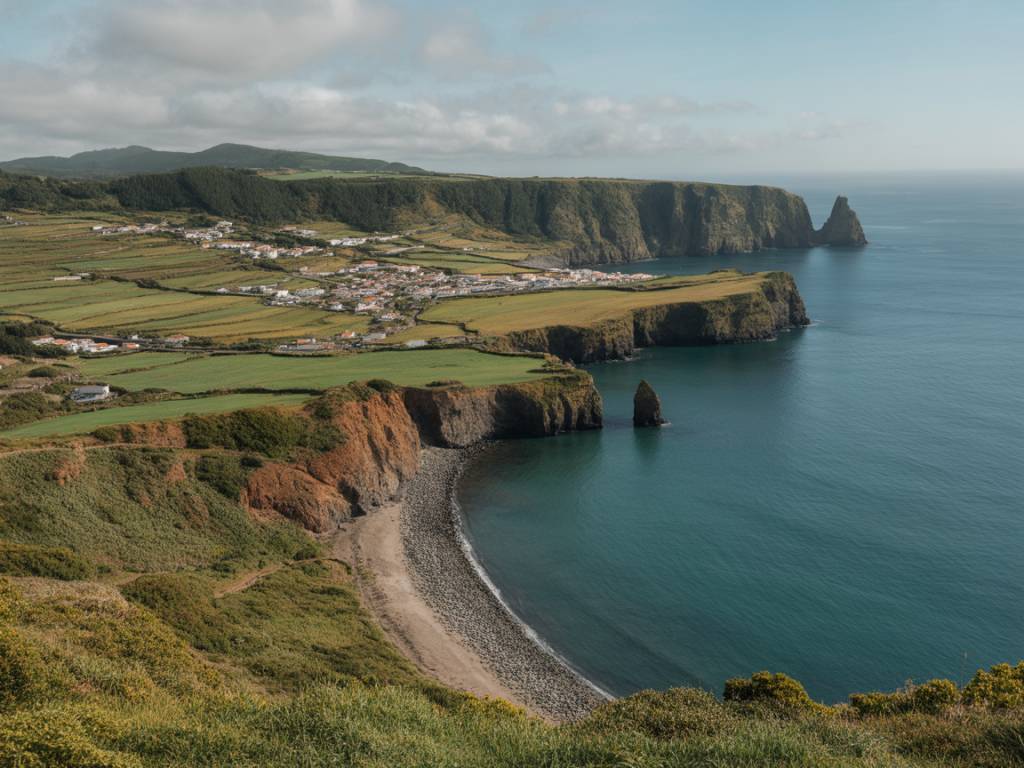
Why the Azores are perfect for slow travel
Set in the middle of the North Atlantic, the Azores feel like a world apart from mainland Portugal. When I first arrived, what struck me was not just the volcanic landscapes and emerald-green pastures, but the pace of life: ferries running on Atlantic time, cafés where no one is in a rush to turn tables, and hiking trails where you can walk for hours without meeting another person.
This remote Portuguese archipelago is made up of nine main islands, each with its own character. Together, they form one of Europe’s most rewarding destinations for slow travel. Instead of ticking off landmarks, the Azores invite you to linger: to soak in geothermal pools, talk with farmers and fishermen, watch the light change over crater lakes, and accept that weather – and not your schedule – is in charge.
For travelers who want to experience Portugal beyond Lisbon and Porto, the Azores offer a wilder, more introspective side of the country. English is widely spoken, but daily life follows local rhythms shaped by the sea, agriculture, and a strong sense of community.
When to go: choosing the right season
The Azores have a mild, oceanic climate year-round, but the weather is famously changeable. Locals like to say you can experience “four seasons in one day,” and after getting drenched under clear blue skies 10 minutes earlier, I can confirm it is not an exaggeration.
For slow travel, the best periods are:
- Late April to June: Lush landscapes, hydrangeas beginning to bloom, fewer crowds, and milder prices. Excellent for hiking.
- September to early October: Sea temperatures are at their warmest after summer, ideal for swimming and whale watching, but with a calmer, post-peak atmosphere.
- Winter (November–March): Stormier, cooler and wetter, but incredibly atmospheric. Great for geothermal baths and travelers who don’t mind rain and want very quiet islands.
If you’re traveling slowly, a bit of unsettled weather is less of a problem. It becomes part of the experience: lingering over a long lunch when fog rolls in, or re-routing your day when a hiking trail disappears into cloud.
Getting there and getting around
Most international visitors arrive via Ponta Delgada on São Miguel, the largest island, with direct flights from Lisbon, Porto and several European cities. Inter-island connections are a combination of domestic flights and ferries. For slow travel, this mix becomes part of your journey rather than a logistical nuisance.
On each island, the key to exploring at your own pace is to:
- Rent a car on São Miguel, Terceira, Pico and Faial – public transport exists but schedules are limited for deeper exploration.
- Rely on taxis and transfers on very small islands like Corvo, or for one-way hikes where a pick-up can be arranged.
- Use ferries in the central triangle (Pico, Faial, São Jorge) in late spring to early autumn, when services are more frequent and seas are calmer.
Island-hopping in the Azores rewards patience. Flights can be rescheduled due to weather, ferries delayed by Atlantic swells. Plan lightly, allow buffer days, and avoid back-to-back connections.
São Miguel: slow days on the “green island”
São Miguel is often the first Azorean island visitors see, and it is perfectly suited to a slower style of travel. Instead of trying to see everything in two days, I recommend spending at least four or five nights here to feel the island’s rhythm.
Base yourself in Ponta Delgada for a taste of Azorean city life: white-and-black basalt churches, small bars pouring local wine, and a waterfront where fishermen repair nets at sunset. From there, explore the island in relaxed day trips.
Highlights for slow travelers include:
- Sete Cidades: Rather than just stopping at Miradouro da Vista do Rei for the postcard view of twin lakes, take the time to walk one of the rim trails. On a clear day, views of the crater and the Atlantic are unforgettable; in the fog, the landscape feels almost otherworldly.
- Furnas and geothermal life: Furnas is where São Miguel’s volcanic heart is most visible. Steam rises from the ground in town, and locals cook cozido das Furnas – a slow-cooked meat and vegetable stew – in volcanic soil. Spend an afternoon soaking in the iron-rich waters of Parque Terra Nostra or the pools at Poça da Dona Beija, then linger for dinner at a small restaurant serving the local stew.
- Tea plantations: At Gorreana or Porto Formoso, you can walk between rows of tea bushes with Atlantic views. These are among the only tea plantations in Europe, and visiting them at a slow pace – walking the trails, tasting different brews – is a reminder of how isolated these islands once were.
- Hot springs and hidden pools: Beyond famous spots, São Miguel is full of small thermal baths and forest-bordered streams. Locals will often point you to quiet places that rarely appear in guidebooks.
São Miguel can feel busy in summer around the main viewpoints, but if you travel slowly and are willing to walk a little further from the car parks, you will often find yourself alone with the landscape.
Pico, Faial and São Jorge: the central triangle
The central group of islands – Pico, Faial, and São Jorge – is where slow travel in the Azores truly comes into its own. With good ferry links in season, it is easy to settle in one place and explore the others without rushing.
Pico: wine, whales and lava fields
Pico is dominated by Montanha do Pico, Portugal’s highest peak. Even if you do not plan to climb it, the mountain shapes everything: clouds cling to its summit, roads curl around its flanks, and villages scatter at its base.
The island is one of the best places in Europe for whale watching, with tours leaving from Lajes do Pico and Madalena. The most rewarding experiences are with small, locally owned operators that emphasize marine conservation and use traditional lookouts, or vigias, on the cliffs.
The UNESCO-listed vineyards of Pico are another slow travel highlight. Vines grow in black lava stone corrals called currais, protected from Atlantic winds by low walls. Walking through this landscape at the end of the day, when the basalt still radiates the sun’s heat, is one of the great sensory experiences of the Azores.
Faial: blue hydrangeas and harbor life
Across the channel from Pico, Faial is known for its hydrangea-lined roads and the cosmopolitan harbor at Horta, long a stopover for transatlantic sailors. Slow days here revolve around the marina: watching yachts arrive, reading the murals that crews paint on the sea wall for good luck, and lingering in cafés overlooking the water.
Inland, the Caldeira – a vast volcanic crater – is best appreciated on a leisurely hike around the rim, where ferns and mosses thrive in the mist. On the western tip of the island, the Capelinhos volcano tells a more recent story: this new land emerged in the 1950s. Walking through its ash-colored moonscape feels like stepping onto another planet.
São Jorge: cliffs, fajãs and quiet trails
São Jorge is long and narrow, edged by steep cliffs that drop to the ocean. At their base lie fajãs – small, flat areas created by landslides or lava flows, now hosting tiny hamlets, gardens and pastures. Reaching many of them involves steep footpaths that test your knees but reward you with deep peace.
This is a hiker’s island. Trails weave along the spine of the island, with views of Pico’s silhouette across the channel. In the fajãs, you will find silence broken only by waves and cowbells. For slow travelers, São Jorge offers one of the purest experiences of Azorean rural life.
Terceira, Flores and Corvo: culture and the edge of Europe
Terceira combines a lively historic town with rolling countryside. Its capital, Angra do Heroísmo, is a UNESCO World Heritage site, with colorful houses, baroque churches and cobbled streets that invite aimless wandering rather than checklists. The island has a strong tradition of festivals, bull-running events, and village celebrations, particularly in summer.
Flores, further west, is one of the most beautiful – and remote – islands I have visited in Europe. Its landscape is a vertical tapestry of waterfalls, mountains and crater lakes. Walking here is less about long-distance trekking and more about slow, contemplative strolls to viewpoints and lagoons, punctuated by quiet evenings in small guesthouses.
From Flores, a short boat ride (when weather allows) leads to Corvo, the tiniest inhabited island in the Azores. With one main village and a road climbing up to a huge, tranquil crater, Corvo is the definition of slow travel: there is nowhere to rush to and nothing to hurry for. Sitting on a bench, watching clouds drift across the caldera, you are about as far as you can be from mainland Europe – geographically and mentally.
Local life, culture and everyday details
Beyond the scenery, what makes the Azores special is the texture of daily life. Agriculture and fishing still matter here. Cows outnumber people on most islands, and you quickly learn to slow down behind a tractor or a herd crossing the road.
Cafés serve strong espresso and queijadas (small cheesecakes) to a mix of locals, off-duty guides and travelers. In village squares, you will hear a blend of Portuguese, the local Azorean accent, and sometimes English from emigrants visiting from the US or Canada. Life feels both rooted and outward-looking, shaped by centuries of migration and return.
Each island has its own festas, often linked to religious traditions, the Holy Spirit, or the sea. If you are traveling slowly, ask at your accommodation about local events – these can be the most memorable experiences, from shared communal meals to small processions along streets decorated with flowers.
Food and drink: tasting the Atlantic
The Azorean table reflects its environment: fresh fish, pasture-fed beef, local cheeses and robust wines. Traveling slowly allows you to return to favorite places, chat with owners, and notice how menus change with the weather and the catch of the day.
Typical experiences include:
- Cozido das Furnas: The volcanic stew of São Miguel, cooked for hours underground. Booking in advance at a Furnas restaurant allows you to see the pots being unearthed from the steaming soil.
- Local cheeses: Especially from São Jorge, famous for its tangy, firm cheese. Many small grocery shops will happily cut you slices to taste before you buy.
- Fish and seafood: From grilled limpets (lapas) with garlic and butter to simple grilled fish, most often served with boiled potatoes and vegetables rather than elaborate sauces.
- Azorean beef: You will see the animals grazing on impossibly green hillsides; in many family-run restaurants, steak comes served simply with garlic, butter and an egg.
- Local wines and liqueurs: Pico’s volcanic wines are particularly distinctive, with a saline edge that seems to echo the nearby ocean.
Practical tips for a slow travel experience in the Azores
To align your trip with the islands’ rhythms, it helps to adjust expectations and habits:
- Stay longer on fewer islands rather than trying to see all nine. A focused trip to São Miguel and the central triangle, for example, can be deeply satisfying over 10–14 days.
- Rent accommodation with a kitchen on at least one island. Shopping in local markets, cooking with regional ingredients, and lingering over breakfast with ocean views add richness to your stay.
- Be flexible with plans. Weather may close trails or delay boats; use these moments to rest, read, or talk with locals rather than fight the elements.
- Book key experiences in advance in high season – whale watching, some guided hikes, smaller guesthouses – but leave several unscheduled days.
- Travel light and layered. You will often change from sun to rain and back again in an afternoon; a waterproof jacket and good walking shoes are essential.
Above all, give yourself permission to do less. The Azores are at their best when you are not racing from viewpoint to viewpoint, but instead sitting quietly by a harbor, watching clouds drift over a volcano and listening to the Atlantic breathing in and out along the shore.