


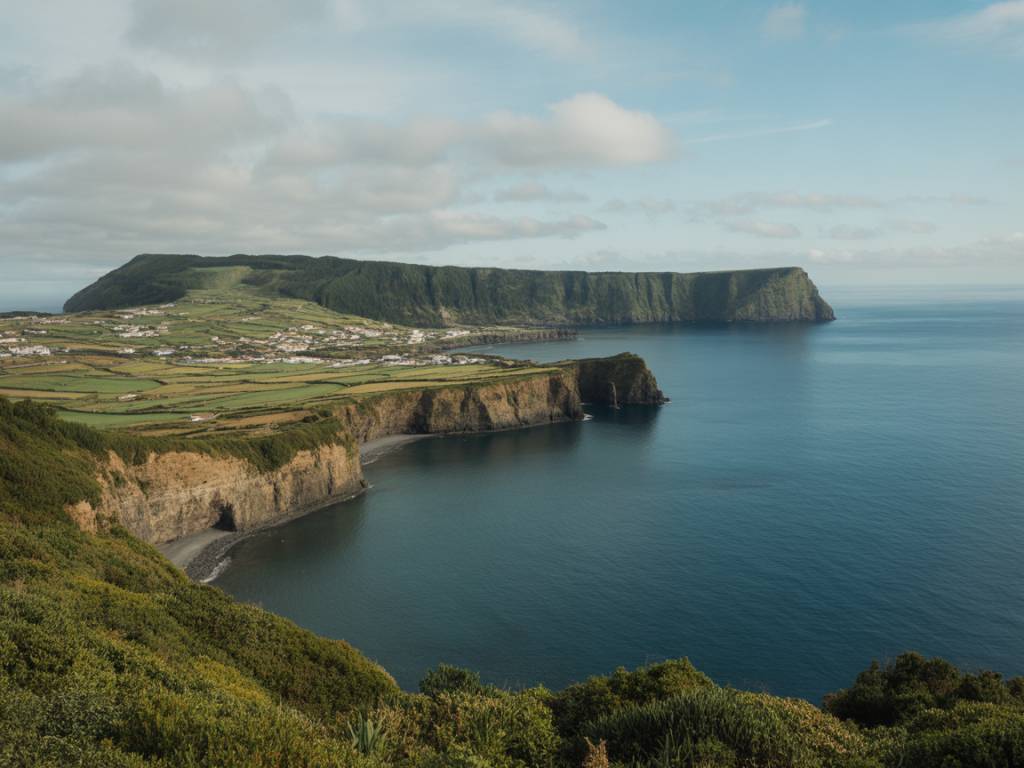
Why the Azores are perfect for slow travel
Set in the middle of the North Atlantic, halfway between Europe and North America, the Azores feel like a secret that somehow escaped mass tourism. This Portuguese archipelago of nine volcanic islands is often described as “Europe’s Hawaii”, but the comparison doesn’t quite do it justice. The Azores are wilder, quieter and more everyday-European: a place where cows sometimes outnumber visitors, where people still greet each other in the street, and where travel is naturally slow because the rhythm of life is still largely dictated by the ocean and the weather.
On my first visit, landing on São Miguel after hours of ocean beneath the plane, I was struck by how green everything was. Fields of hydrangeas acted as windbreaks along the roads, steam rose from the ground in Furnas, and black volcanic cliffs dropped straight into the Atlantic. It’s a destination that rewards travellers who take their time: staying longer on fewer islands, walking instead of rushing, and spending time in cafés and local grocery shops as much as at the famous viewpoints.
If you’re looking for an authentic European island escape, a focus on nature and sustainable tourism, and the chance to really disconnect, a slow travel itinerary in the Azores is one of the most rewarding experiences you can have in Portugal.
When to visit the Azores for a slower pace
The Azores enjoy a mild, oceanic climate year-round, but it’s not a classic “beach holiday” destination. Weather can be unpredictable: four seasons in one day is almost a cliché here, yet it’s accurate. For slow travel, this unpredictability is an asset rather than a drawback. You learn to adapt, to change plans, to appreciate the islands as locals do.
For a more relaxed, less crowded experience:
- April to early June: Lush landscapes, hydrangeas beginning to bloom, and fewer visitors. Ideal for hiking, whale watching and hot springs.
- September to October: Sea temperatures are at their warmest after summer, but crowds and prices start to drop. Great for swimming, diving and wine tasting on Pico.
- Winter: Quiet, stormy, dramatic. Ferries are more limited and some tours don’t run, but if you want solitude, wild seas and thermal baths, this can be very special.
I’ve visited in both spring and early autumn, and in both seasons the islands felt calm and unhurried. The difference is mostly in how green the landscapes look and how often clouds gather around the volcanic peaks. Whatever the month, build flexibility into your plans: a viewpoint can be wrapped in fog one hour and completely clear the next.
Choosing your islands: going deep instead of wide
There are nine inhabited islands in the Azores. You can’t “do” them all in a week — and that’s precisely the point. Slow travel here means selecting two or three islands and getting to know them properly rather than chasing passport stamps.
São Miguel: geothermal pools and crater lakes
São Miguel, the largest and most accessible island, is where most visitors start. It has the best infrastructure and plenty of direct flights from mainland Portugal and several European cities. Yet if you leave Ponta Delgada behind, it still feels incredibly rural.
What makes São Miguel ideal for slow travel is its variety:
- Sete Cidades: The twin lakes inside a vast volcanic caldera are the iconic Azores view. Visit outside peak hours and consider walking the rim trail instead of just driving from miradouro to miradouro.
- Furnas: A village that literally steams. You can watch cozido, a traditional stew, being slowly cooked in the hot ground before tasting it for lunch, then soak in mineral-rich hot springs at Terra Nostra or Poça da Dona Beija after a long walk.
- Gorreana Tea Plantation: Europe’s oldest tea plantation, still family-owned. Walking among the tea bushes with the Atlantic in the background feels worlds away from modern Europe.
- Ribeira dos Caldeirões and Nordeste: The island’s quieter, eastern side is a paradise of waterfalls, terraced fields and small villages.
Stay in a local guesthouse or a small rural hotel rather than in the centre of Ponta Delgada and you’ll quickly adjust to the slower tempo of island life: roosters, church bells and the sound of the wind replacing traffic noise.
Pico: wine, whales and dramatic volcanoes
Pico feels different the moment you see it from the ferry: a conical volcano rising sharply from the ocean, often capped with a small halo of clouds. It’s one of the best islands in the Azores for travellers who love landscapes shaped by both lava and human patience.
What stands out on Pico:
- Whale watching from Lajes do Pico: The Azores were once a whaling hub; now they’re one of Europe’s best places for sustainable whale watching. Boats are small, local guides are knowledgeable, and the emphasis is on respectful distance.
- UNESCO-listed vineyards: Dry stone walls of black lava rock protect low-lying vines from wind and salt spray. Walking through this patchwork at sunset, with the ocean on one side and the volcano on the other, is one of the most atmospheric experiences in the archipelago.
- Climbing Mount Pico: A demanding but rewarding hike, best done with a licensed guide. If you’re travelling slowly, give yourself room in your itinerary so you can choose a day with favourable weather conditions.
On Pico, the evenings stretch. Locals sit outside small bars with a glass of local verdelho wine, conversations drift slowly, and it’s easy to spend hours simply watching the light change over the mountain.
Terceira: history, festivals and everyday life
Terceira balances nature with a particularly strong sense of Azorean culture. Its capital, Angra do Heroísmo, is a UNESCO World Heritage city with pastel-coloured houses, cobbled streets and churches that reflect centuries of Atlantic trade.
If São Miguel is about landscapes and Pico about geology and wine, Terceira is where I felt closest to the everyday life of the islands:
- Angra do Heroísmo: A walkable historic centre where locals shop in traditional grocery stores and stop for espresso and pastries at counters rather than in international chains.
- Algar do Carvão: A rare chance to step inside an ancient volcanic chimney, down past lush moss and ferns into cool, cavernous darkness.
- Festivals and bull traditions: From spring to early autumn, Terceira’s calendar is full of religious festivals and the controversial but culturally significant “touradas à corda” (bulls on a rope), which visitors often witness accidentally while driving between villages.
Spending several days here without a packed list of “must-sees” let me notice smaller details: laundry hanging from balconies, azulejo tiles depicting saints, the pace at which people actually live in this Atlantic outpost.
Living the Azores slowly: practical tips
Slow travel in the Azores is less about visiting particular attractions and more about how you move through the islands. A few practical choices can transform your trip.
- Stay longer in fewer places: Instead of trying to hop across four or five islands in a week, consider one “base island” plus one side trip. For a 10-day trip, for example, São Miguel plus Pico (with a stop in Faial) creates a rich, varied itinerary without feeling rushed.
- Rent a car, but use it gently: Public transport is limited, so a car is highly recommended. However, choose one region per day instead of driving loops around the island. Expect agricultural traffic, narrow roads and viewpoints that tempt you to stop constantly.
- Accept the weather as part of the experience: If clouds cover Sete Cidades, don’t force it. Visit a tea plantation, a hot spring or a local restaurant instead and try the viewpoint another day. Locals plan this way; travellers can too.
- Sleep in local accommodation: Rural tourism houses, small family-run hotels and apartments in village centres are more in tune with the islands than large, generic resorts.
- Travel off-peak: Shoulder seasons mean less pressure on popular spots, easier last-minute bookings and more time to talk to people who live here year-round.
Sustainable travel in the Azores
The Azores are one of Portugal’s leading regions for sustainable tourism, with protected marine areas, certified hiking trails and restrictions on large-scale development. Visitors play a direct role in keeping the archipelago wild and resilient.
A few habits make a difference:
- Stick to marked trails: Many paths cross sensitive vegetation or private farmland. Following the waymarked routes protects both.
- Choose responsible whale watching: Look for operators who limit passenger numbers, maintain distance from animals and avoid chasing behaviour.
- Support local food systems: The islands produce excellent dairy, beef, pineapples, tea, wine and seasonal vegetables. Eating in small, locally owned restaurants keeps money in the community.
- Avoid single-use plastics: Tap water is drinkable on the main islands; a reusable bottle and a small daypack reduce waste significantly.
On every island I visited, from São Miguel’s rural backroads to Pico’s vineyards, people were acutely aware that their landscape is both fragile and precious. Tourism is welcome, but only if it respects the environment that draws travellers here in the first place.
Everyday life in the Azores: beyond the viewpoints
What surprised me most wasn’t the famous crater lakes or the columns of steam, but how “lived-in” the Azores felt. This is not an archipelago converted into a theme park. Dairy trucks still collect milk before sunrise, older men play cards in village cafés, and children in school uniforms buy pastries after class.
To feel this side of Azorean life:
- Spend a rainy morning in a pastelaria (bakery-café) watching people come and go for espresso and bolas de berlim.
- Visit a small harbour at the end of the afternoon to see fishermen prepare their boats and chat about the weather.
- Stop at roadside miradouros where locals also pause their day, not just at the most photographed Instagram points.
- Step into village churches, often open and quiet, to see how strongly Catholic traditions still shape community rhythms.
The islands are safe, relaxed and surprisingly affordable compared with many other European coastal destinations. English is widely spoken, especially among younger people and in tourism services, but using a few Portuguese phrases is appreciated.
Planning your Azores itinerary with slow travel in mind
Designing a slow travel route in the Azores starts with a simple question: do you want to prioritise landscapes, culture, or a mix of both? From there, you can choose the islands that match your interests, then deliberately under-schedule your days.
A balanced, unhurried plan might look like:
- 7–10 days on São Miguel: Enough time to explore Furnas, Sete Cidades, Nordeste and the south coast, interspersed with rest days in hot springs or coastal towns.
- 5–7 days split between Pico and Faial: Base yourself on one island and ferry to the other for day trips, with time for whale watching, vineyard walks and a visit to the Capelinhos volcano on Faial.
- 4–6 days on Terceira: Longer if you’re interested in festivals and local culture, with plenty of time to wander Angra do Heroísmo and the island’s interior.
The key is to leave some days open. Let the weather, a local recommendation or a chance encounter in a café shape your plans. In a world of over-scheduled city breaks, the Azores invite you to travel differently: to slow down, to notice more, and to accept that some of the best experiences here are the unplanned ones — a patch of sunlight on a foggy road, a spontaneous swim in a natural pool, or a conversation with someone whose family has lived on these windswept islands for generations.