Slow travel in the Faroe Islands: remote landscapes and authentic Nordic culture
Why the Faroe Islands are perfect for slow travel
The Faroe Islands sit in the North Atlantic between Iceland and Norway, a scatter of 18 volcanic islands that feel both remote and surprisingly accessible. This is not a place for box-ticking sightseeing or racing between attractions. It’s a destination that rewards time, patience, and curiosity: in other words, slow travel.
On my own visits, what struck me most was how quickly the rhythm of daily life changes. Ferry timetables, shifting fog, and the direction of the wind matter more than social media notifications. The pace of the islands nudges you to adjust your own, making the Faroe Islands one of the most compelling slow travel destinations in Europe.
Getting to the Faroe Islands and the best time to go
Despite their remote image, the Faroe Islands are relatively easy to reach. Direct flights connect Vágar Airport with cities like Copenhagen, Edinburgh, Paris, and Reykjavik. The approach is a first glimpse of what slow travel in the Faroe Islands is all about: you descend through clouds to a runway carved between cliffs, waves crashing below.
If you prefer an even slower arrival, the Smyril Line ferry sails from Hirtshals in Denmark to Tórshavn, sometimes continuing on to Iceland. The journey takes around 36 hours and sets the tone for a more deliberate kind of trip, as you watch the Danish coast fade and the North Atlantic swell rise.
There is no truly “bad” season to visit, but your experience will differ:
- Summer (June–August): Long days, relatively mild temperatures (10–15°C), and more stable ferry and helicopter schedules. Ideal for hiking and first-time visitors.
- Shoulder seasons (May, September): Fewer visitors, still good hiking conditions, changing light and dramatic weather, excellent for photographers.
- Winter (October–April): Short days, rough seas, and a real sense of isolation. You might glimpse the Northern Lights on clear nights, but many tours and some services run on reduced schedules.
For a first slow travel experience in the Faroe Islands, late spring and early autumn offer a good balance between accessibility and solitude.
Embracing the spirit of slow travel in the Faroe Islands
Slow travel in the Faroe Islands is less about ticking off “top 10 attractions” and more about staying put, observing, and accepting that you are not in control of everything. Ferries can be cancelled because of swell, roads can be closed due to wind, and a hike can disappear into fog in minutes. Instead of fighting this, slow travellers fold it into the experience.
Practically, this means building buffer days into your itinerary and staying longer in fewer places rather than trying to “do” all 18 islands. It means lingering in tiny harbours, sitting in cafés in Tórshavn as the weather rolls in off the sea, and talking to locals who have built a life in this rugged environment.
Staying longer in Tórshavn: Nordic charm on a human scale
Tórshavn, one of the smallest capitals in the world, is the natural base for slow travel in the Faroe Islands. With around 20,000 inhabitants, it feels more like a maritime town than a capital city, yet it concentrates much of the islands’ cultural life.
Wandering the old quarter of Tinganes, you cross grass-covered rooftops and narrow lanes lined with black-tarred wooden houses and bright red government buildings. In stormy weather, the contrast between the cosy interiors and the horizontal rain outside makes you understand why the Faroese developed such a strong indoor culture of storytelling, knitting, and music.
Instead of rushing through Tórshavn, treat it as a place to return to between excursions. Over several days you’ll start to recognize the same faces on the harbour, learn which café opens earliest, and find your favourite corner in a bar where fishermen mix with politicians and students.
Remote villages and island-hopping at a slower pace
Life in the Faroe Islands radiates out from the capital into fishing villages clinging to steep hillsides. Each island, and often each village, has a distinct character. Slow travel is about giving yourself the time to feel those differences.
- Vágar Island: Many visitors rush here for the Instagram-famous Múlafossur waterfall near Gásadalur. Stay longer and you discover quiet trails above Sørvágur, sheep-dotted slopes, and the tranquil village of Bøur with its postcard view of sea stacks Tindhólmur and Drangarnir.
- Streymoy and Eysturoy: The central islands contain some of the most accessible villages: Saksun with its tidal lagoon and turf-roof houses, Tjørnuvík with a black sand beach framed by headlands, and Gjógv with its natural gorge harbour. Visit early in the morning or stay overnight nearby to experience these places when the day-trippers have gone.
- Northern Isles: Islands like Kalsoy, Kunoy, and Viðoy feel dramatically remote, even though they are connected by tunnels and ferries. On Kalsoy, the Kallur lighthouse hike has become famous, but in slow travel spirit, allow time to visit multiple villages and talk to the few permanent residents.
Ferries are an integral part of the experience. They are not just transport; they are social spaces where schoolchildren, workers, and visitors share the same tables. Factor in waiting time at the quay, because those pauses looking at the sea are part of what makes travel here different.
Hiking and wild landscapes: taking your time on the trail
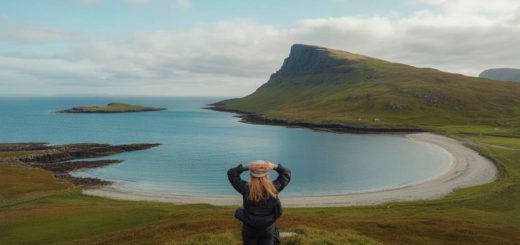
The Faroe Islands are a paradise for hikers who appreciate wild, unmanicured routes. The landscapes are raw: sheer cliffs dropping into the North Atlantic, rolling green hills lined with stone walls, and lakes perched above the sea.
Popular hikes such as Trælanípa (the “slave cliff”) and the trail to Drangarnir have seen increased regulation in recent years. Land is often privately owned, and in some places you now pay a fee or must go with a guide. While this can feel restrictive, it also reflects a local effort to manage tourism sustainably and maintain paths.
To truly slow down, consider lesser-known routes. On Eysturoy, I spent an entire afternoon following an unmarked sheep path between two villages, seeing no one except for a farmer repairing a stone fence. The soundscape was limited to wind, distant surf, and the calls of oystercatchers. This is where the Faroe Islands reward those who step away from the obvious viewpoints.
Always check weather and local advice before heading out. Fog can move in suddenly, and paths are often exposed. The slow travel approach here is also the safe one: don’t chase every summit, and be willing to turn back.
Authentic Nordic culture in everyday life
When people search for “authentic Nordic culture” in the Faroe Islands, they sometimes expect museums or staged experiences. In reality, authenticity is woven into small, daily details: the way people greet you in a shop, the knitting in a café corner, or the unhurried conversations on a late ferry.
Language is a strong marker of identity. Faroese, related to Icelandic and Old Norse, is spoken everywhere, with Danish and English widely understood. You’ll hear Faroese announcements on buses and see bilingual signs, a reminder that you are in a distinct culture, not just an offshoot of Denmark or Iceland.
Music is another window into local life. Traditional ballads and chain dancing survive alongside a surprisingly active contemporary music scene, from indie rock to experimental folk. Time your trip with one of the islands’ small festivals if you can, such as G! Festival in Gøta, where stages overlook the sea and weather becomes part of the performance.
Food, cafés, and the taste of the North Atlantic
Faroe Islands cuisine reflects both isolation and ingenuity. With limited arable land and a harsh climate, locals historically relied on sheep, seabirds, fish, and preserved foods. Today, this has evolved into a culinary scene that is receiving international attention, while still remaining firmly rooted in local traditions.
- Seafood: Fresh cod, haddock, and salmon appear on almost every menu. Simple dishes, like lightly pan-fried fish with boiled potatoes and a creamy sauce, are often the most satisfying, letting the quality of the ingredients speak.
- Ræst: Fermented lamb or fish, dried and aged in special sheds, has a strong flavour that not everyone will love, but it is uniquely Faroese. Trying it, even in a mild form, offers insight into how people historically survived winter.
- Cafés and bakeries: In Tórshavn and larger villages, cafés have become natural hubs. You’ll find cardamom buns, dense rye bread, and excellent coffee. On rainy days, this is where slow travellers read, write postcards, or simply watch the weather through steamed-up windows.
Eating locally sourced food is one of the easiest ways to support the Faroese economy and connect with the islands’ identity. Don’t hesitate to ask staff about dishes; stories about how ingredients were caught, harvested, or preserved often follow.
Respecting local life and fragile environments
For a place as small and ecologically sensitive as the Faroe Islands, slow travel is not just a philosophy but a necessity. The landscapes that appear untamed are, in reality, carefully managed pastures and bird habitats.
As a visitor, this means staying on marked paths, closing gates behind you, and respecting areas where access is restricted during nesting season. Drone use is heavily regulated and often unwelcome near villages and seabird cliffs, both for privacy and wildlife protection.
Life here can seem idyllic, but it is also tough. Many communities rely on fishing and seasonal work. By travelling slowly—booking locally owned guesthouses, hiring local guides, and shopping in small stores—you help sustain a way of life that is under pressure from globalization and depopulation.
Practical tips for slow travel in the Faroe Islands
Slowing down does not mean ignoring logistics. A bit of planning makes it easier to travel at a relaxed pace once you arrive.
- Transport: Renting a car offers the most flexibility, but be prepared for narrow roads, single-lane tunnels, and sudden weather changes. Public buses and ferries form an efficient, if slower, network; combining both can suit travellers who value the journey itself.
- Ferries and helicopters: For some outer islands, Atlantic Airways runs subsidised helicopter services that locals use like buses. Flights are often very affordable but have strict baggage policies and limited seats. Booking in advance is essential.
- Accommodation: Book early, especially in summer. Guesthouses, farm stays, and small hotels dominate the scene. Staying several nights in one place and using it as a base fits perfectly with a slow travel philosophy.
- Weather and clothing: Layers, waterproofs, and good boots are non-negotiable. The phrase “four seasons in one day” feels like an understatement here. Being comfortable outside makes it far easier to enjoy unplanned stops and long walks.
- Connectivity: Mobile coverage is surprisingly good on main islands, but some remote areas still have patchy signal. Use the offline option of maps and accept that there will be moments when you are simply offline—one of the gifts of travelling here.
Slow travel in the Faroe Islands is about more than just moving gently through remote landscapes. It is an invitation to step into a different rhythm of life, shaped by weather, sea, and community. Those who come with time, respect, and curiosity often leave with the feeling that the islands have revealed something rare: a corner of Europe where authenticity is not a product, but a daily reality.