


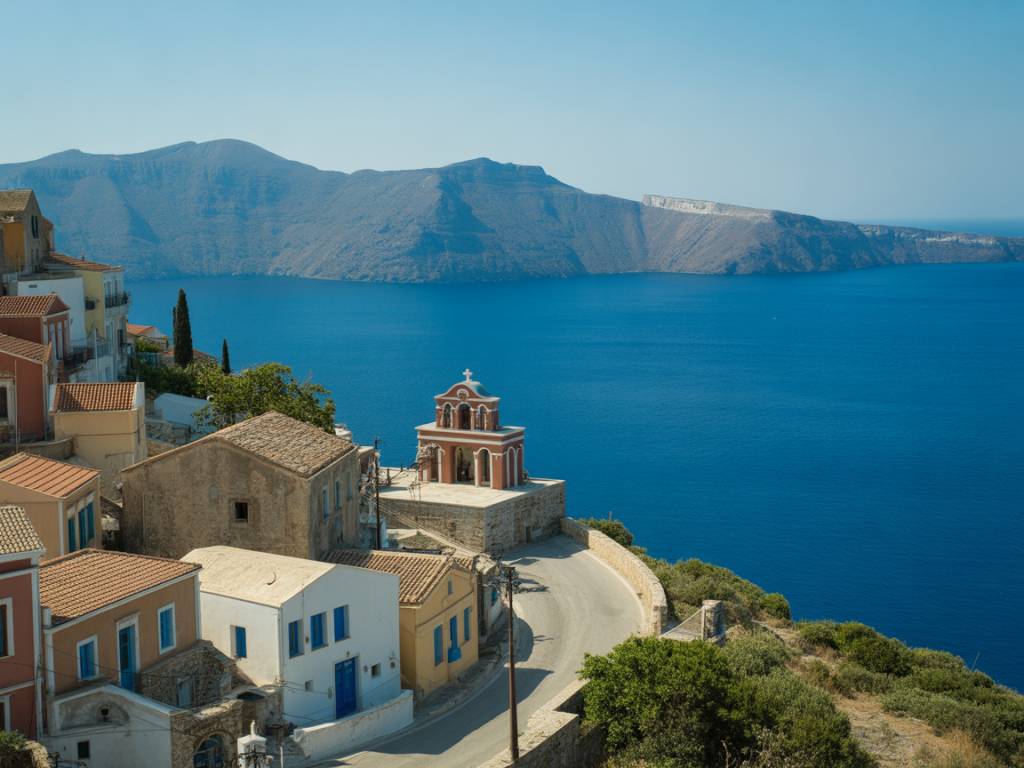
Why the Peloponnese is made for slow travel
The Peloponnese rewards travelers who move at a human pace. This large southern Greek peninsula is not a place to rush through between airport transfers and checklist sightseeing. It is a landscape of winding coastal roads, olive groves, mountain passes, Venetian harbors, stone villages, and beaches that feel far removed from the busier islands. For anyone searching for an authentic Greece road trip, the Peloponnese offers something increasingly rare: time, space, and a strong sense of place.
What makes slow travel in the Peloponnese especially compelling is the variety packed into a single region. In one day you can drive from a Byzantine fortress town to a quiet fishing village, stop for a seafood lunch by the water, then continue inland to a mountain settlement where the air is cooler and the architecture changes from whitewashed island style to heavy stone houses with slate roofs. The distances are manageable, but the roads encourage pauses. That is part of the experience.
For travelers looking beyond the classic Greek island itinerary, the Peloponnese delivers a deeper, more grounded view of everyday life in Greece. Markets are still local, cafes still operate at an unhurried rhythm, and many villages retain traditions that have survived tourism without being fully transformed by it. It is one of the best places in Greece for scenic drives, village stays, and coastal exploration combined with culture, food, and history.
Driving the Peloponnese: the pleasure is in the road itself
A Peloponnese road trip is not simply a way to connect destinations; it is the destination in many moments. The road from Nafplio to Leonidio, for example, narrows and bends along the coast in a way that invites frequent stops. The sea on one side flashes between cliffs and roadside terraces, while the hills rise in dry folds on the other. In spring, the slopes are dotted with wildflowers. In late summer, the light becomes harder and more golden, giving the stone villages a warm glow.
The region’s main routes are generally straightforward, but secondary roads can be slow, especially in mountainous areas. That is not a drawback if your goal is slow travel in Greece. The Peloponnese is best approached with flexibility: leave room for a café stop in a village square, a detour to an archaeological site, or a spontaneous swim at a beach you noticed from the road. Car travel is the most practical way to experience the region, particularly if you want to reach smaller settlements and coastal stretches that public transport does not serve well.
Some of the most memorable drives include the coast between Nafplio and Monemvasia, the Mani peninsula’s dramatic roads between Areopoli and Limeni, and the inland mountain routes near Dimitsana and Stemnitsa. These are roads that reveal Greece gradually. Each curve opens onto a different topography, and each village seems to preserve its own pace of life.
Timeless villages that capture the spirit of the Peloponnese
One of the region’s strongest appeals lies in its villages. Many visitors to Greece focus on islands, but the Peloponnese villages offer a different, often more layered experience. They are not built for quick consumption. They ask you to stay, walk, and observe.
Dimitsana, in the Arcadia mountains, is one of the most atmospheric village stops in the Peloponnese. Its stone houses, narrow lanes, and elevated position create a sense of isolation that feels both peaceful and deeply rooted. Nearby, the outdoor museum and the Lousios Gorge add historical and natural context, making it an excellent base for travelers interested in hiking, Orthodox monasteries, and rural Greece.
Stemnitsa, also in Arcadia, is smaller but equally memorable. It is known for its traditional architecture, artisan workshops, and shaded square where locals gather in the afternoon. The village gives a strong impression of continuity, where everyday life and heritage are not separated. Staying overnight here allows visitors to experience the quieter side of the Peloponnese after day-trippers have moved on.
In the Mani peninsula, Areopoli stands out for its stone towers and austere beauty. It feels distinct from the softer image many people associate with Greece. The architecture is severe, the streets are narrow, and the surrounding landscape is dry and rocky, with olive trees struggling in the sunlight. Yet this is what gives the area its character. Nearby Limeni, on the coast, offers a striking contrast: clear water, waterfront tavernas, and a small harbor where fishing boats and swimming visitors share the same narrow strip of land.
Monemvasia is another essential stop for slow travelers. The medieval town, set on a rock connected to the mainland by a causeway, is one of the most distinctive places in Greece. Inside the old town, there are vaulted stone passages, quiet courtyards, restored guesthouses, and views across the sea that change constantly with the light. Even when it is busy, the place still preserves an almost dreamlike atmosphere after sunset, especially once day visitors leave.
Coastal roads, hidden coves, and seaside towns
The Peloponnese coastline is long and varied, alternating between broad sandy beaches, pebble coves, fishing harbors, and long open stretches of road overlooking the water. Unlike more compact island coastlines, here the drive itself becomes part of the beach experience. You may pass a quiet bay with only a few cars parked beside it, then a cliff road with no buildings in sight for several kilometers.
Along the Argolic Gulf, towns like Nafplio combine elegance and accessibility. Nafplio is one of the most attractive towns in Greece, with neoclassical facades, a lively waterfront promenade, and a strong café culture. It works well as an entry point into the Peloponnese, especially for travelers arriving from Athens and wanting a softer introduction to the region. The climb to the Palamidi fortress offers wide views over the town and the gulf, while the old streets encourage slow wandering.
Further south, the coastline becomes more dramatic. In the Mani, the sea seems sharper and the land more exposed. Small ports such as Gerolimenas and Kardamyli have become well known among travelers, but they retain a restrained, low-rise character that suits the landscape. Kardamyli, in particular, blends beach access with a village feel and is a strong choice for those seeking boutique stays, walking routes, and a less crowded coastal atmosphere.
For swimmers, the Peloponnese offers countless opportunities to stop for a dip without planning a full beach day. The water is often exceptionally clear, especially in sheltered coves. In late spring and early autumn, the sea remains inviting while the roads are less busy, making these seasons ideal for a Greece coastal road trip.
Food, cafés, and the rhythm of local life
Traveling slowly through the Peloponnese naturally leads to long lunches and repeated café stops. This is a region where food is closely tied to place. Olive oil is central, often produced locally and used generously. Tomatoes, greens, legumes, cheeses, and seafood appear in everyday meals, not as curated “local experiences” but as ordinary fare. That is what makes the dining experience feel authentic.
In villages and small towns, tavernas often serve straightforward dishes that reflect what is available nearby. Grilled fish in coastal settlements, braised goat or pork in mountain villages, seasonal pies, and simple salads with firm tomatoes and local cheese are common. Dessert may be as simple as spoon sweets or yogurt with honey. The quality often comes less from complexity than from freshness and continuity.
The café culture is equally important. In many Peloponnese villages, the square remains the social center. Espresso bars, traditional kafeneia, and family-run cafés create a rhythm that is slow but never static. It is normal to sit for a while, watch the flow of local life, and notice how the day changes from morning errands to the quiet of the afternoon and the livelier pace of evening.
For travelers who want to understand life in the Peloponnese, these everyday stops matter as much as the headline attractions. They reveal how communities function, how people gather, and how the region sustains itself beyond tourism.
Archaeology, monasteries, and landscape as heritage
The Peloponnese is also one of Greece’s richest regions for history and heritage travel. A slow itinerary gives you the time to combine natural scenery with cultural sites in a way that feels coherent rather than rushed. Ancient Olympia is one of the region’s major draws, and visiting it early in the day allows you to move through the site before the heat becomes too intense. The ruins are set in a landscape that still feels open and spacious, which helps visitors imagine the scale and significance of the ancient sanctuary.
Mycenae and Epidaurus are equally important for travelers interested in classical Greece. Mycenae has a powerful, almost severe presence, with its cyclopean walls and high position over the plain. Epidaurus, by contrast, is associated with harmony and performance, and its theater remains one of the best-preserved in the ancient world. Combining these sites with nearby towns such as Nafplio makes for a balanced itinerary that includes both archaeology and contemporary Greek life.
In the mountainous interior, monasteries and gorge walks add another dimension. The region around Lousios Gorge, with its monasteries built into steep terrain, is especially rewarding for visitors who enjoy combining cultural stops with hiking. Here, the landscape is not simply a backdrop; it is part of the story. The monasteries, paths, and river valleys together illustrate how settlement and spirituality have long adapted to the contours of the land.
Where to stay for a slower Peloponnese itinerary
Accommodation in the Peloponnese ranges from seaside guesthouses to restored stone homes in mountain villages and small boutique hotels in historic towns. For slow travel, staying in fewer places for longer is the best approach. Two or three bases can cover a broad region without making the journey feel fragmented.
Nafplio works well for the northeast Peloponnese, especially if you want easy access to archaeological sites and the Argolic coastline. Kardamyli or Areopoli are strong choices for the Mani if your focus is scenery, coastal drives, and village life. In Arcadia, Dimitsana or Stemnitsa are ideal for mountain walks, heritage sites, and cooler summer temperatures. Monemvasia suits travelers who want atmosphere and a strong sense of historic place, particularly if they plan to stay overnight inside or near the old town.
What matters most is not luxury alone, but location and character. A simple room with a balcony overlooking a harbor or a stone guesthouse in a village square can offer a more memorable experience than a larger resort property. In the Peloponnese, being able to walk to dinner, hear local life at the end of the day, and wake up to the sound of church bells or the sea often matters more than amenities.
Practical tips for planning a Peloponnese road trip
To make the most of slow travel in the Peloponnese, it helps to think seasonally. Spring and early autumn are especially favorable, with comfortable temperatures, good driving conditions, and fewer crowds. Summer can be excellent on the coast, but inland sightseeing may require careful timing because of the heat. Winter is quieter and more local in character, though some coastal businesses reduce their hours.
- Rent a car if you want to explore villages, beaches, and mountain roads independently.
- Plan shorter driving days so you can stop for viewpoints, meals, and spontaneous detours.
- Book accommodation in advance during July and August, especially in popular places like Nafplio, Kardamyli, and Monemvasia.
- Mix coastal and inland stops to understand the full diversity of the region.
- Allow time for walking through village centers rather than treating them as brief photo stops.
- Bring cash for smaller tavernas and cafés, especially in remote areas.
For travelers who want Greece beyond the islands, the Peloponnese is one of the strongest regions to explore. It offers scenic drives, historic towns, authentic villages, and a coastline that feels open and contemplative. More than anything, it offers a pace of travel that encourages observation. The road, the food, the architecture, and the landscape all ask you to slow down enough to notice details: the change in stone from one village to the next, the sound of cicadas in a midday square, the way a harbor looks just before sunset, or the quiet pride of a local café that has served the same community for decades.
That is what gives the Peloponnese its lasting appeal. It is not a destination to finish quickly. It is a place to move through carefully, staying long enough for the contours of daily life to become visible and for the timeless character of Greece to emerge in full.