


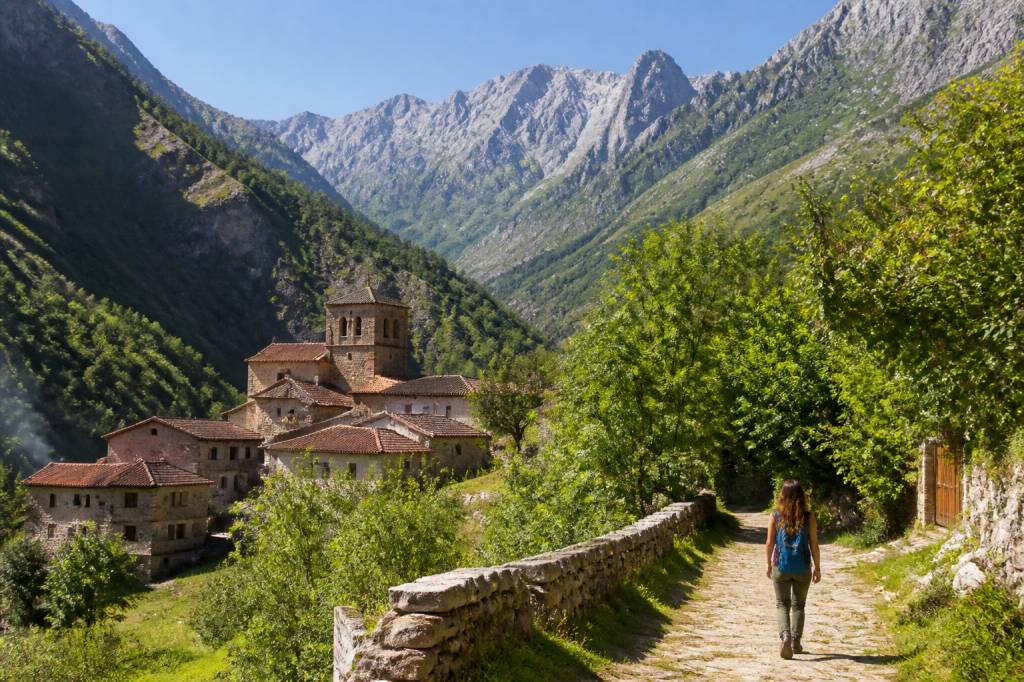
Few places in Spain reward a slower pace of travel as convincingly as the Picos de Europa. Stretching across Asturias, Cantabria, and Castilla y León, this rugged mountain range offers a striking contrast to the country’s more familiar coastal resorts and big-city itineraries. Here, the landscape feels immediate and dramatic: sheer limestone walls, deep glacial gorges, green high pastures, and villages where daily life still follows the rhythm of livestock, weather, and seasonal traditions. For travelers looking beyond Spain’s well-known cultural capitals, the Picos de Europa deliver a rich blend of hiking, local gastronomy, mountain hospitality, and authentic rural life.
What makes the region particularly appealing for slow travel in Spain is its balance of accessibility and remoteness. You can reach the main gateways in a few hours from cities such as Oviedo, Santander, or León, yet once you are inside the national park, the mood changes completely. Roads wind through valleys and climb into the mountains; small stone villages appear suddenly around a bend; and viewpoints open onto landscapes that feel far older and more elemental than the modern pace of life below. It is the kind of destination where staying longer is not only possible, but essential if you want to understand how the mountains shape the culture.
The character of the Picos de Europa
The first thing that stands out in the Picos de Europa is the scale. The mountains rise sharply, often without the long transitional slopes common in other European ranges. This creates an almost theatrical landscape, especially when clouds drift through the valleys and light changes rapidly over the cliffs. The range is part of the Cantabrian Mountains and is divided into three main massifs: the Western, Central, and Eastern Massifs. Each offers a different travel experience, from pastoral scenery and famous cable-car access to tougher trekking routes and quieter, less visited corners.
Unlike destinations that are built around a single monument or city center, the appeal here lies in a network of places and experiences. One morning might begin in a village bakery with a simple breakfast of coffee and pastries, followed by a walk through a gorge. By afternoon, you might be on a mountain path above a hamlet where cows graze near stone barns. This is not a region to rush through. The best way to travel in the Picos de Europa is to stay several nights in different bases and allow the weather, road conditions, and local recommendations to shape your route.
Villages that define the region
One of the most memorable aspects of visiting the Picos de Europa is the collection of villages tucked into the valleys and foothills. These are not museum villages designed solely for visitors. People live, farm, and work here, and the atmosphere reflects that reality. In Asturias, the village of Cangas de Onís is often used as a gateway, and while it is busier than the smaller settlements, it remains a useful base with services, restaurants, and access to the park. Its Roman bridge is one of the area’s most recognizable landmarks, and the town has a steady, lived-in energy that makes it practical for longer stays.
Further into the mountains, Covadonga is a significant stop for both cultural and religious reasons. The sanctuary set into the hillside draws pilgrims and travelers alike, while the nearby lakes of Enol and Ercina are among the most photographed places in northern Spain. Early in the day, before the coaches arrive, the area can feel almost meditative, with still water reflecting the surrounding peaks. The contrast between the sacred site below and the high mountain scenery above gives this part of the Picos de Europa a unique atmosphere.
In Cantabria, Potes is one of the most appealing bases for slow travel. Surrounded by mountains and crossed by narrow streets and stone bridges, it has an easygoing pace and a strong culinary identity. From here, travelers can explore the Liébana valley, sample local cheese and cider, and take day trips into the western edge of the national park. Potes also feels practical without losing charm, which is important for anyone planning a longer stay in the region.
Another village that leaves an impression is Bulnes, reached today by funicular from the valley or on foot via a demanding mountain path. Its isolation was once extreme, and that remoteness is still part of its identity. The village is small, with stone houses and narrow lanes, and it sits in a dramatic setting below high peaks. Visiting Bulnes helps explain why the Picos de Europa remain so tied to traditional mountain life: in many places, the geography still determines the pace and shape of everyday existence.
Hiking, viewpoints, and mountain routes
The Picos de Europa are one of the best hiking destinations in Spain, but they are not just for expert mountaineers. The park offers a wide range of trails, from accessible walks to strenuous high-altitude routes. Slow travel here often means choosing one or two hikes rather than trying to cover too much ground. That approach leaves room for pauses, detours, and a more genuine sense of place.
Among the most famous routes is the Cares Gorge trail, a spectacular path carved into the cliffs between Caín and Poncebos. The walk is well known, and for good reason: the scenery is dramatic almost from the beginning, with the path clinging to the rock above the river far below. Even though it has become popular, it remains one of the most memorable hikes in northern Spain. For travelers interested in the landscape without committing to a multi-day trek, it is an essential experience.
The Covadonga Lakes area also offers a different kind of walking, with gentler trails and broad panoramic views. The combination of mountain pasture, reflective lakes, and grazing cattle creates a softer, more pastoral side of the park. On clear days, the scenery can feel almost alpine, while on misty days the landscape becomes more mysterious and enclosed. The weather changes quickly in the Picos de Europa, so hikers should be prepared with layers, water, and solid footwear even for shorter routes.
For travelers who want more solitude, less-traveled paths in the Liébana valley and the eastern massifs can be rewarding. These areas see fewer visitors than the flagship viewpoints, and they offer a stronger sense of silence, especially outside peak summer months. Slow travel in the mountains often means accepting that some routes will depend on conditions and that the most beautiful experiences are sometimes unplanned.
Local traditions and rural life
What gives the Picos de Europa depth beyond its scenery is the continuity of local traditions. Rural life still plays a central role, and the region’s identity is closely linked to livestock farming, mountain cheese production, and seasonal celebrations. In many villages, you still see stone barns, cow bells, and family-run farms that have adapted to modern tourism without abandoning their roots. This is one reason the area feels so different from Spain’s urban destinations: tradition here is not staged for tourists, but embedded in everyday life.
Cheese is one of the strongest expressions of that culture. The region is famous for varieties such as Cabrales, a blue cheese made in Asturias and aged in natural caves in the mountains. Visiting a local cheese cave or tasting room adds an important layer to any trip, because it reveals how geography, climate, and artisanal methods come together. The caves provide natural humidity and temperature conditions, and the result is a cheese with a sharp, distinctive character that reflects the rugged environment.
Cider culture is another important part of the experience, especially in Asturias. Pouring cider from height, known locally as escanciar, is more than a novelty for visitors; it is a social ritual and a visible sign of regional identity. In villages and towns around the park, cider houses and traditional restaurants serve meals that connect directly to local agriculture and mountain living. This makes the Picos de Europa an excellent destination for culinary tourism, especially for travelers interested in regional food rather than polished fine dining alone.
Where to eat and what to taste
Eating well in the Picos de Europa is surprisingly easy if you focus on local dishes and family-run establishments. The cuisine is hearty, designed for mountain weather and physically demanding work. Expect bean stews, grilled meats, regional cheeses, and simple desserts that feel rooted in home cooking. In Asturias, fabada asturiana is one of the signature dishes, a rich bean stew often served with chorizo and morcilla. It is especially satisfying after a day of walking in the cold or damp mountain air.
In Cantabria and Liébana, try cocido lebaniego, a traditional chickpea-based stew that reflects the region’s pastoral character. Local restaurants often serve menus del día that are excellent value and provide a useful window into the area’s culinary habits. These meals are usually unhurried, and that suits the region’s overall pace. Dining is part of the experience, not something to rush between attractions.
For travelers seeking a more complete food itinerary, look for small producers selling honey, cured meats, artisan cheeses, and cider. Markets in towns such as Cangas de Onís and Potes are useful places to sample regional products and speak with vendors who know the area well. If you are interested in food tourism in Spain, the Picos de Europa offer a strong example of how local gastronomy can deepen your understanding of a destination.
Practical tips for slow travel in the Picos de Europa
To make the most of the region, it helps to travel with flexibility. Weather in the mountains can shift quickly, and some roads are narrow or busy in high season. Driving is often the most convenient way to move between valleys, villages, and trailheads, but many travelers also combine a car with longer stays in one or two bases. That approach reduces stress and allows more time for hiking, tasting local food, and exploring village life.
The best months depend on your priorities. Late spring and early autumn are particularly attractive for hiking, with greener scenery in spring and fewer crowds in autumn. Summer offers longer days and easier access to high routes, but popular spots can become busy. Winter is quieter and more atmospheric, though mountain conditions require caution and some routes may be limited.
- Base yourself in more than one village if possible to experience different parts of the park.
- Start popular hikes early in the morning to enjoy calmer conditions and better light.
- Pack layers, even in summer, because temperatures can change quickly at altitude.
- Reserve accommodation in advance during peak travel periods, especially in small villages.
- Take time for local food, cider, and cheese rather than treating the region as only a hiking stop.
The Picos de Europa are not a destination for those who want to tick off sights quickly. They are best approached as a landscape to be inhabited for a few days, or even longer, through walks, meals, village visits, and quiet observation. For travelers seeking slow travel in Spain, few regions combine natural drama, cultural continuity, and everyday authenticity so effectively. The mountains command attention, but the real reward comes from the details: the sound of cattle bells in a valley, the taste of local cheese, the sudden opening of a gorge, and the sense that life here still follows the contours of the land.